
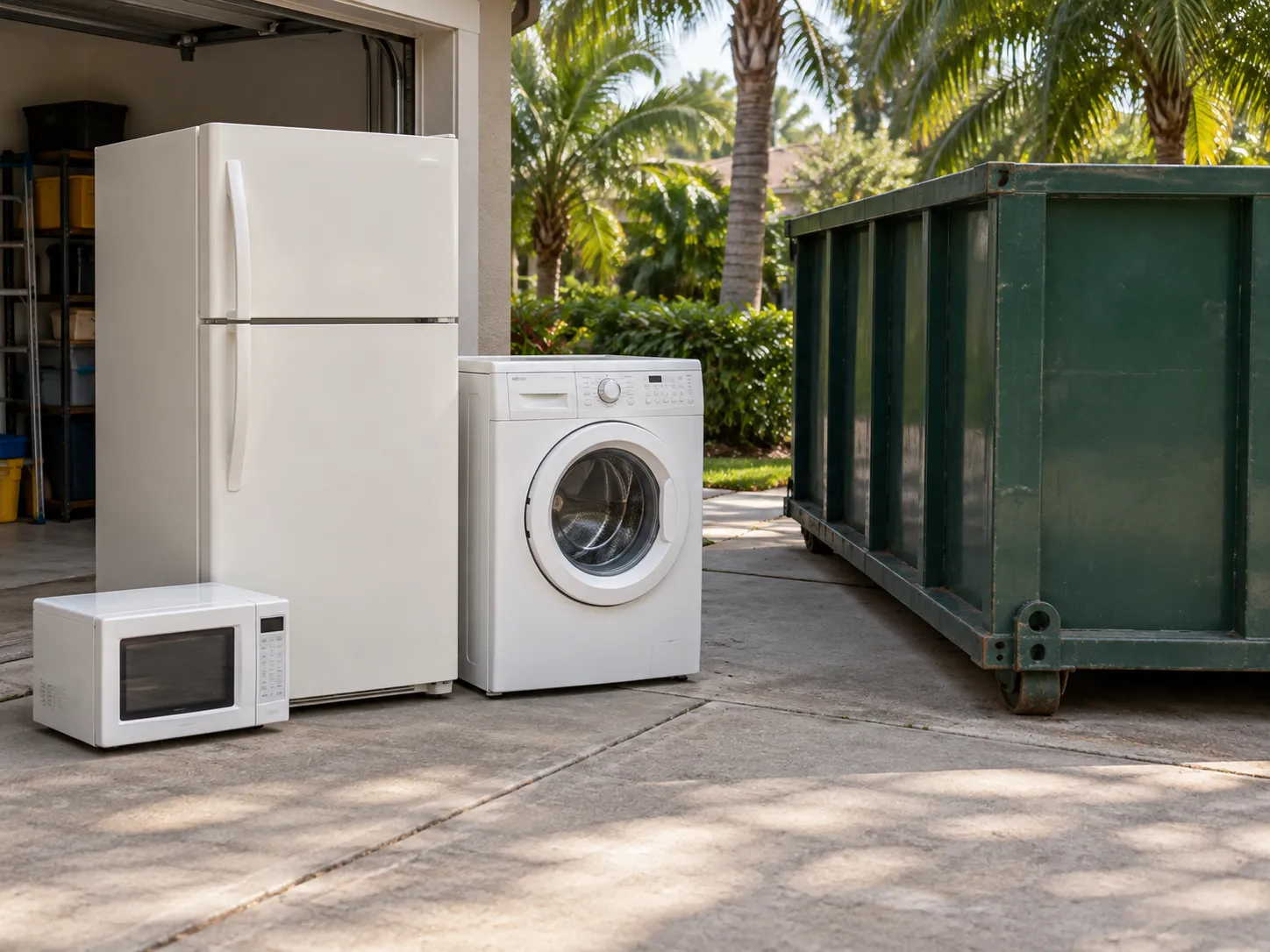
Do not assume every appliance can be placed in a mixed residential dumpster. Refrigerators, freezers, air conditioners, washers, dryers, stoves, water heaters, microwaves, and countertop devices do not all follow the same route.
Classify the item before choosing a service
| Item type | Question to ask | Reason |
|---|---|---|
| Refrigerator, freezer, or air conditioner | Who handles refrigerant recovery, and what proof or preparation is required? | Refrigerant systems need qualified handling; do not vent or dismantle them yourself. |
| Washer, dryer, stove, or water heater | Is it accepted as a white good, and must hoses, cords, doors, or tanks be prepared? | Large metal appliances may have a separate collection or drop-off process. |
| Television or computer | Is the item handled as electronic scrap rather than an appliance? | County e-scrap rules and resident eligibility may apply. |
| Small plugged-in device | Does the current program accept this exact type? | County guidance distinguishes among small appliances. |
| Retailer replacement | Does the seller remove the old unit at delivery, and what does it cost? | Take-back can avoid a second moving step. |
Check Manatee County’s current public options
Manatee County calls large appliances such as refrigerators, air conditioners, washing machines, dryers, stoves, freezers, water heaters, and pool heaters “white goods.” Its Solid Waste page says white goods require separate handling and describes scheduled bulk service and direct landfill options. Review the current Manatee County Solid Waste guidance. Source reviewed September 23, 2026; program eligibility, fees, and schedules can change.
The county’s Lena Road Landfill page lists appliances among materials accepted for a fee and publishes current hours and rate information. It also says visitors check in at the scale house and that mixed or improperly separated loads may be charged differently. Check the Lena Road Landfill page before traveling. Source reviewed September 23, 2026; geographic scope is Manatee County’s facility and rules.
Separate electronics from white goods
Manatee County’s e-scrap guidance lists televisions, computers, phones, cameras, and other electronic devices under a separate program. The county notes residential eligibility limits and directs businesses with larger e-scrap amounts to call for information. A microwave or countertop appliance may appear in different program lists depending on the exact service, so confirm the item instead of relying on a broad category name.
Prepare without hazardous disassembly
- Unplug the unit and follow the manufacturer’s moving guidance.
- Remove food, personal data, and loose contents.
- Shut off and disconnect water or gas only through a qualified person when the task requires it.
- Do not cut refrigerant lines, open sealed systems, or vent refrigerant.
- Secure doors only as the receiving program or hauler directs.
- Keep the appliance dry and accessible for assessment.
Questions for a private provider
- Is this exact appliance accepted in the container or handled separately?
- Does the quoted price include appliance handling or a separate fee?
- Who is responsible for refrigerant, plumbing, gas, or electrical disconnection?
- Where should the item be staged, and must it remain upright?
- What should happen if the unit leaks or contains food, water, or chemicals?
Photograph the appliance label area without exposing a serial number if it is not needed, and send a full view that shows size and condition. Keep the item out of the dumpster until the provider confirms the route.
Source record: Manatee County Solid Waste Division, Lena Road Landfill, and HHW/e-scrap service pages. Retrieved September 23, 2026. Geographic scope: Manatee County public services; confirm eligibility before use.