
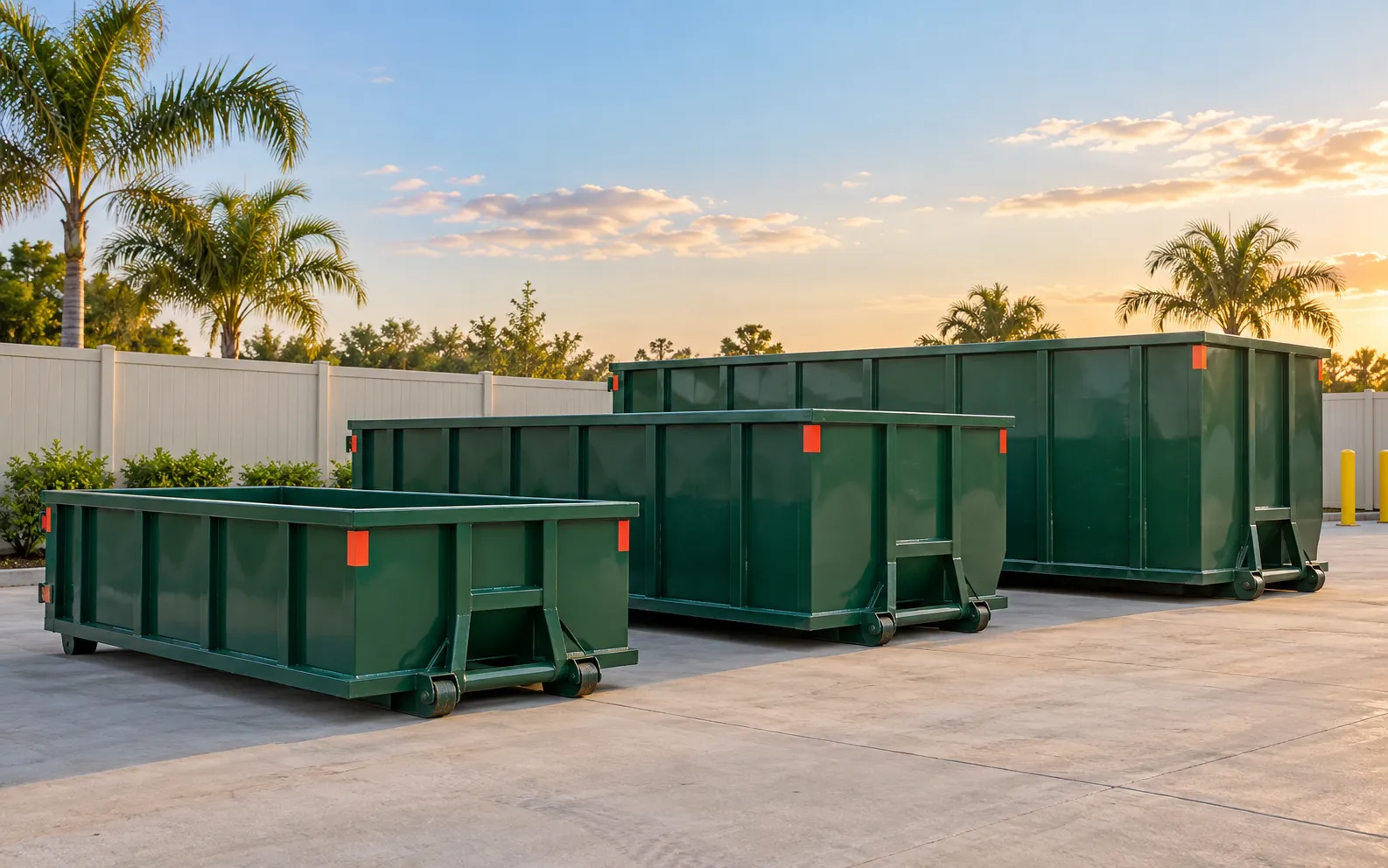
How to Choose a Residential Dumpster Size Without Guessing
A practical way to compare your debris pile, material type, access, and project pace before you call.
Read the guideA residential roll-off dumpster keeps cleanout and renovation debris in one place while you work. Tell us what you are clearing, where the container can sit, and when you need it moved.
 Manatee County service
 Placement planned with you
Share the material, rough volume, address, and timing.
Discuss container fit, placement access, and price factors.
Keep material below the rim and arrange the pickup.
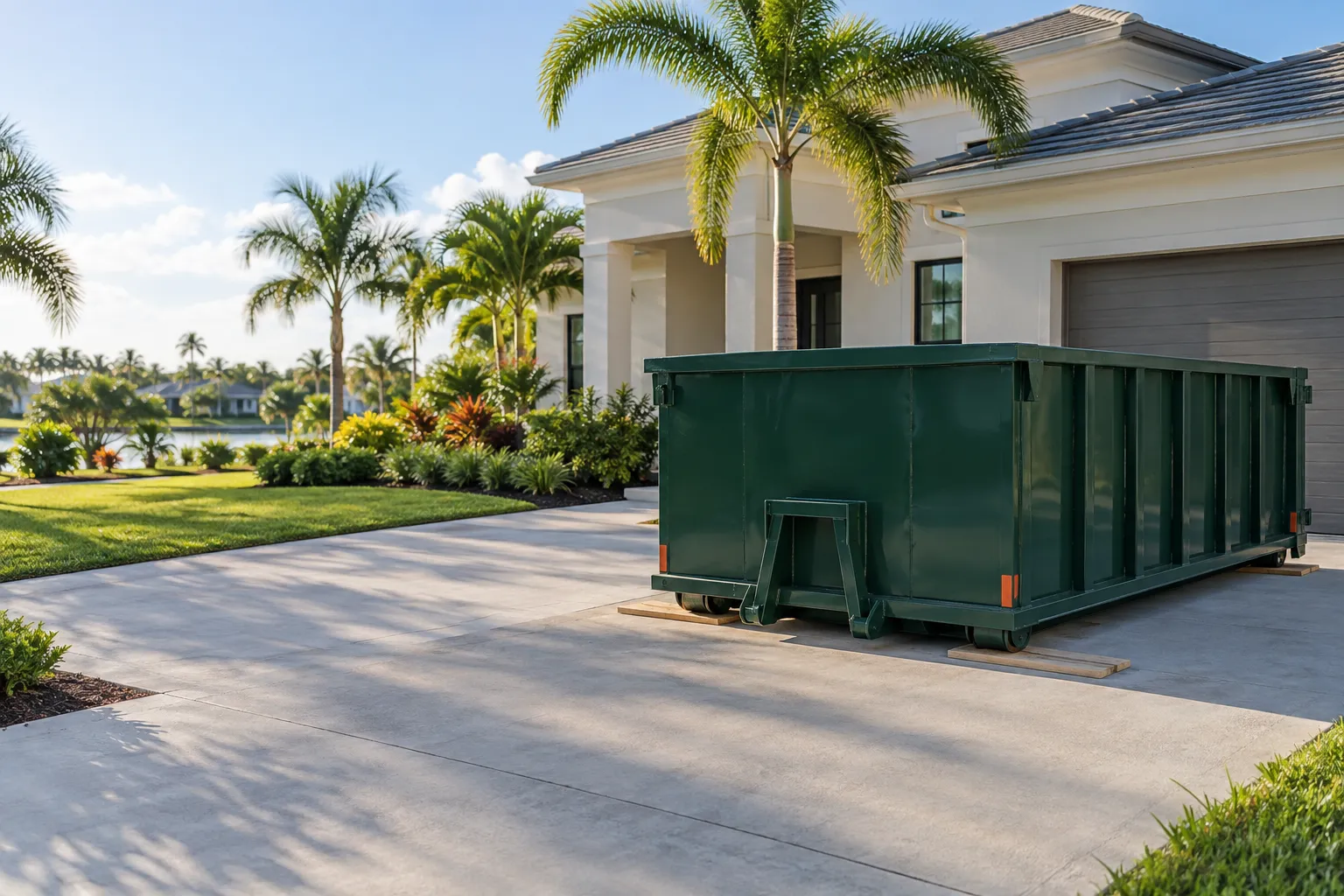
A roll-off dumpster can serve a room-by-room cleanout, a move, or a renovation when the material is accepted and the site gives the delivery vehicle safe access.
Ask about appliances, electronics, tires, batteries, paint, fuel, pool chemicals, and any item with a warning label. Some require a separate disposal route.
Look for firm, level ground, overhead clearance, gate width, parked vehicles, irrigation heads, and enough room for delivery and pickup.
Use the size-and-access checklist →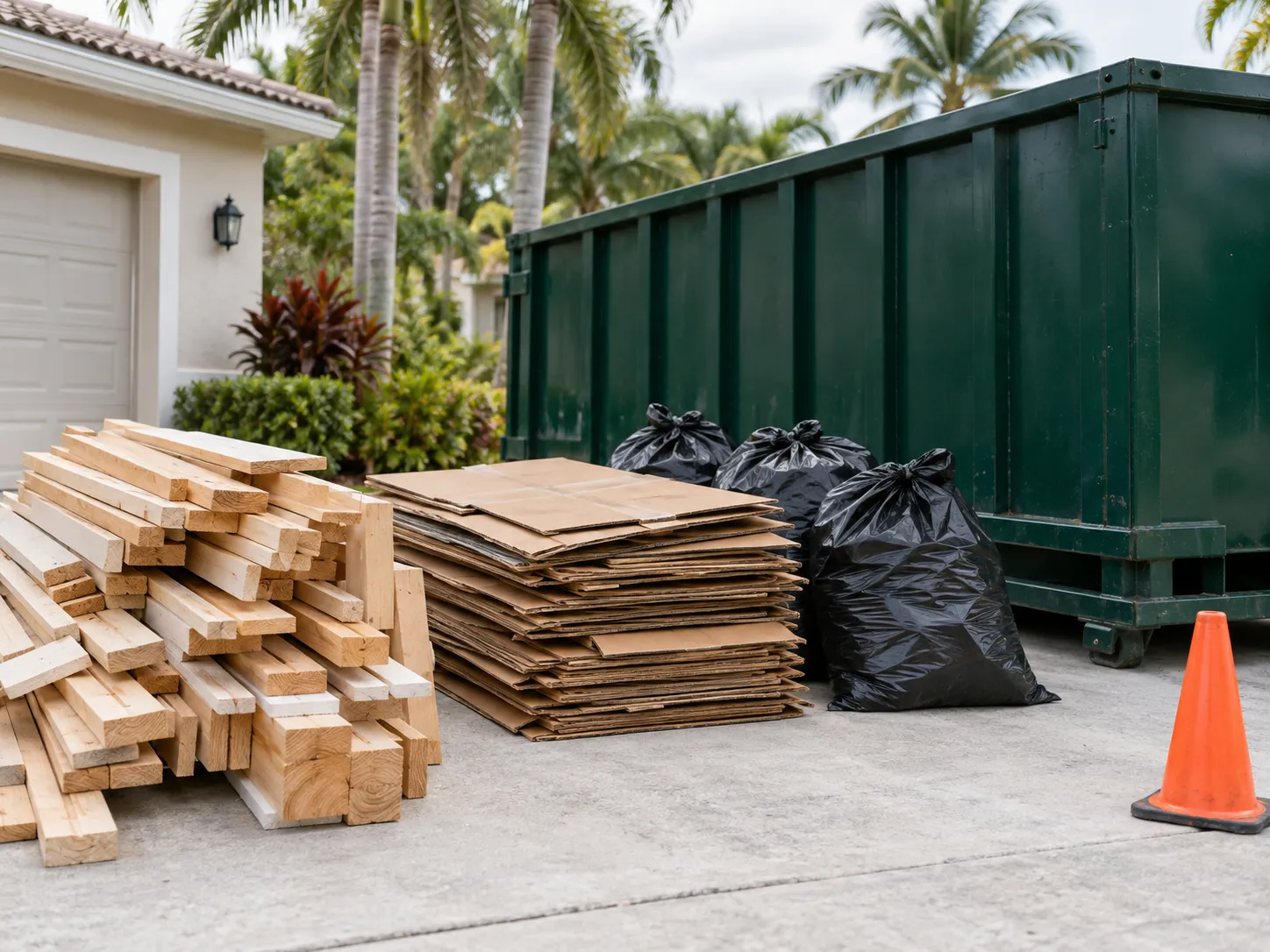
Text photos when possible. Separate cleanout contents from heavy masonry, dirt, concrete, roofing, or restricted items so the load can be assessed accurately.
Confirm the service address, placement surface, gate or driveway constraints, expected rental period, and pickup plan.
Pricing can depend on container size, material type, weight, travel, rental time, access, and extra handling. Get the approved details before loading.
Load evenly, stay below the container rim, close any walk-in door, and move vehicles or obstacles before the pickup window.
A reliable quote starts with the job as it exists. Photos and a plain description are more useful than trying to guess cubic yards.
Size, delivery distance, and the room required for the truck.
Household contents and heavy debris have different handling limits.

The requested drop-off, pickup, and time on site.
Surface, width, overhead clearance, obstacles, and placement changes.
The supplied service area is Manatee County. Because distance and access can affect availability, call with the exact service address before planning around a delivery date.
For county-run curbside collection or direct landfill service, check the current Manatee County Solid Waste guidance first. A private dumpster rental is a separate service.
See contact detailsThese answers keep the quote and the container plan grounded in your actual project.
Name the main material, the largest or heaviest items, the approximate room or pile size, and anything unusual. Mention concrete, dirt, roofing, appliances, electronics, tires, batteries, liquids, paint, chemicals, or fuel separately.
That depends on the surface, slope, width, overhead clearance, property access, and equipment needed. Share photos and placement concerns before delivery. Protective boards can reduce concentrated contact but cannot guarantee against all surface damage.
Keep all material below the top rim and distribute weight evenly. Items projecting above the container or hanging over the sides can make transport unsafe and may prevent pickup.
Do not place hazardous, flammable, corrosive, reactive, or explosive material in the container. Confirm batteries, paint, fuel, pool chemicals, propane, electronics, tires, appliances, and medical waste before loading.
Five practical guides cover size, accepted material, safe loading, appliances, and garage cleanouts.
A practical way to compare your debris pile, material type, access, and project pace before you call.
Read the guide
Sort common renovation and cleanout material while keeping hazardous waste and electronics on the right path.
Read the guide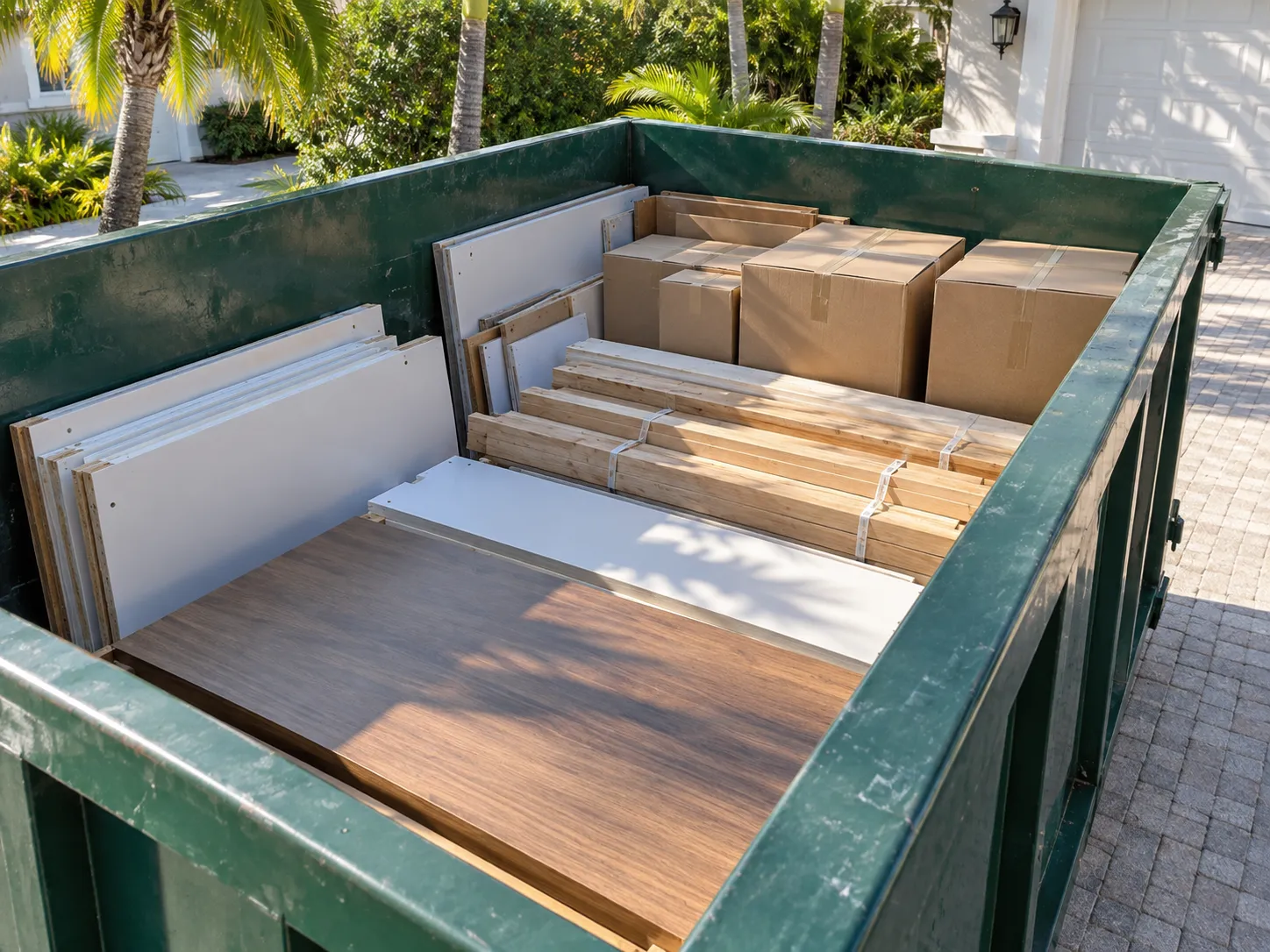
A loading order that keeps the walkway clear, distributes weight, and avoids an overfilled container.
Read the guideCall or text the address, project type, material, and timing. Photos help with the first conversation.