
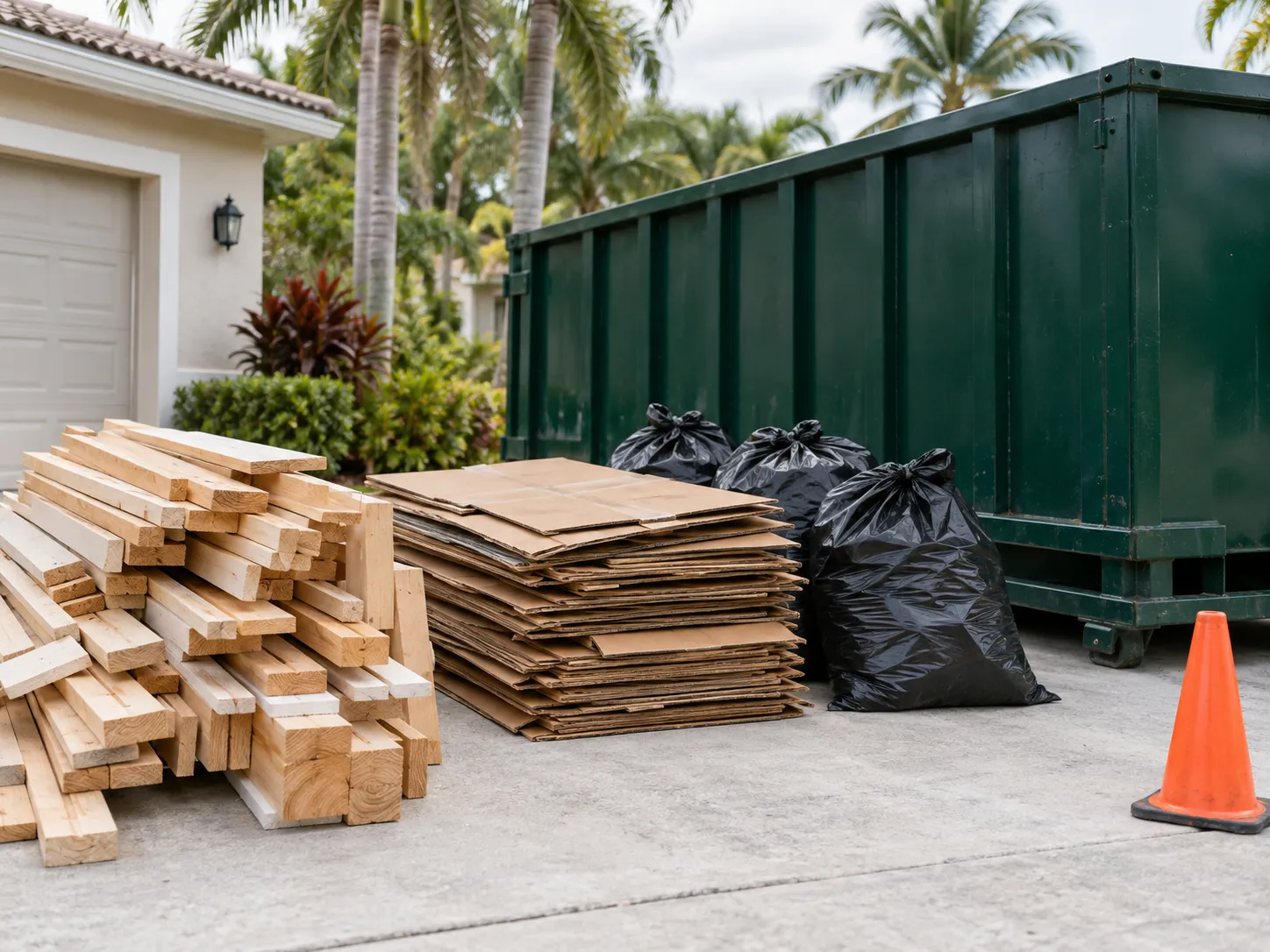
No universal “yes list” covers every container. The provider’s equipment, disposal facility, weight terms, and the exact load all matter. Ask about the material in plain language and keep uncertain items aside until they are approved.
Start with four sorting zones
| Zone | Examples | Next action |
|---|---|---|
| Likely container material | Approved household contents, furniture, cabinets, nonhazardous wood, drywall, and general cleanout debris. | Confirm the list and load limits with the provider. |
| Heavy debris | Concrete, soil, brick, block, tile, plaster, shingles, and stone. | Describe separately; do not mix without approval. |
| Special items | Appliances, tires, mattresses, electronics, and unusually large items. | Ask about acceptance, preparation, and added handling. |
| Keep out | Fuel, oil, paint, pesticides, pool chemicals, propane, rechargeable batteries, and anything labeled flammable, toxic, corrosive, reactive, warning, or danger. | Use an approved HHW or other designated program. |
Hazardous waste needs its own route
Manatee County identifies products labeled flammable, toxic, corrosive, reactive, or explosive as household hazardous waste. Its published examples include aerosols that are not empty, antifreeze, ammunition, batteries, cleaning compounds, diesel, fertilizer, pesticides, fluorescent bulbs, gasoline, motor oil, paint, stain, varnish, propane tanks, and rechargeable batteries. The county tells residents not to place those items in regular trash. Check Manatee County’s current HHW and e-scrap instructions before traveling. Source reviewed September 23, 2026; eligibility and schedules apply to Manatee County residents and can change.
Florida’s Department of Environmental Protection also notes that every Florida county has a household hazardous-waste program and warns that improper disposal can contaminate groundwater. Review Florida DEP household hazardous-waste guidance. Source reviewed September 23, 2026; statewide guidance does not replace county instructions.
Batteries are not bag filler
Do not hide batteries inside a bag, device, toy, or drawer. Florida DEP says nickel-cadmium and small sealed lead-acid rechargeable batteries may not be discarded in the trash under Florida law. The agency directs homeowners toward county HHW programs and battery-recycling locations. See Florida DEP battery guidance. Source reviewed September 23, 2026.
Electronics and appliances need a direct answer
Manatee County’s curbside bulk pilot excludes electronic scrap such as televisions, cell phones, lithium batteries, chargers, gaming consoles, and computers. The county publishes separate drop-off and pickup information for e-scrap, with residential eligibility limits. That public program is separate from a private dumpster rental.
Refrigerators, air conditioners, washers, dryers, stoves, freezers, water heaters, and pool heaters are treated as white goods by the county. Ask the provider about each appliance and whether doors, refrigerants, or other components require special handling. Do not remove refrigerants yourself.
Use a hold area during the cleanout
- Keep chemicals in original labeled containers and do not mix them.
- Place batteries and electronic devices in a dry, separate location.
- Set appliances and tires aside until the provider confirms the route.
- Keep dense debris separate so its volume can be assessed.
- Photograph uncertain items and ask before loading.
Once every uncertain item has an approved route, use the safe loading guide to organize the container itself.
Source record: Manatee County HHW/e-scrap service page, Manatee County Bulk Collection Pilot Program, and Florida DEP household hazardous-waste and battery pages. Retrieved September 23, 2026. Geographic scope: Manatee County resident programs and Florida statewide guidance.