
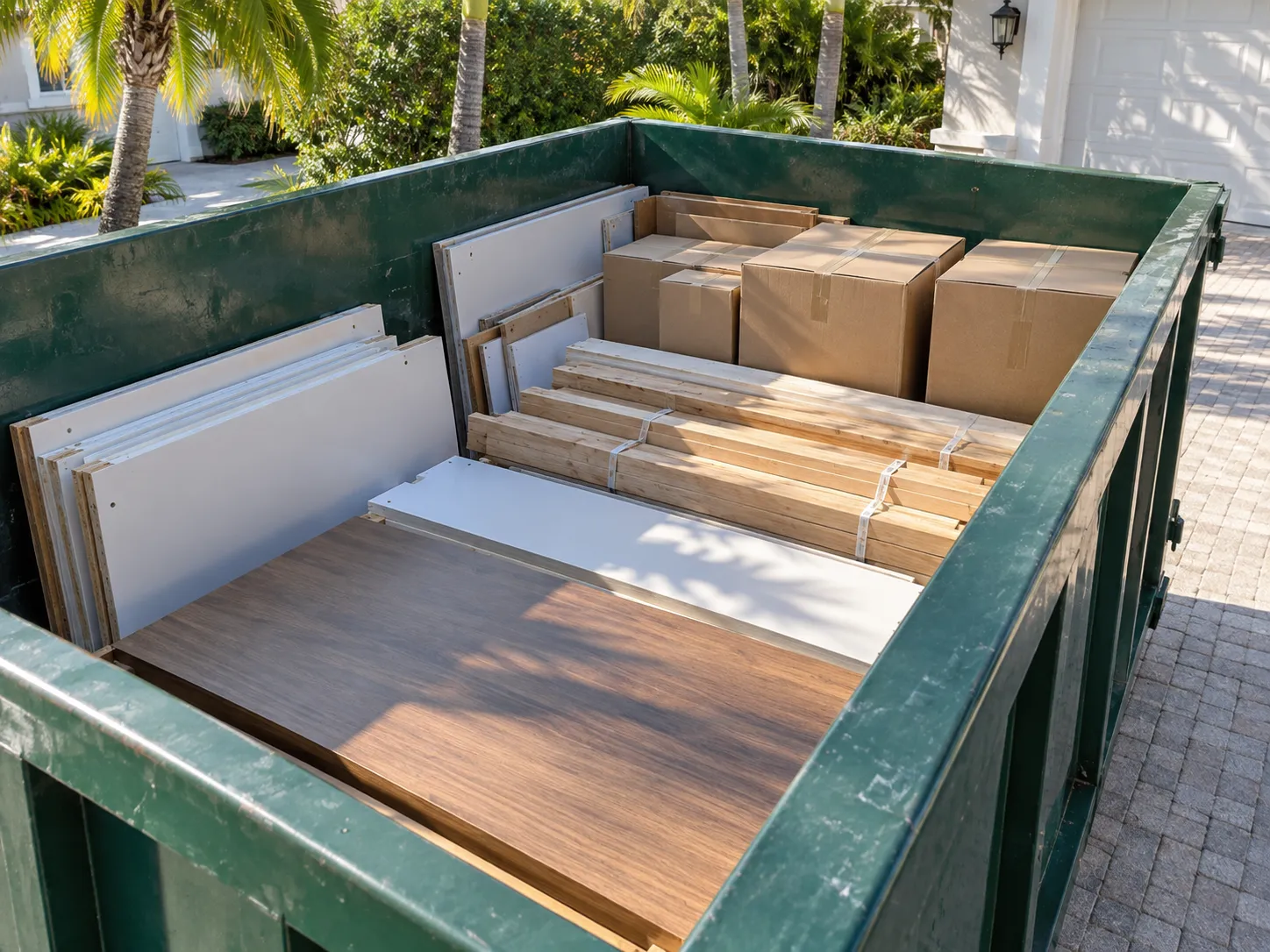
A useful loading plan begins outside the container. Clear the route between the work area and the dumpster, remove trip hazards, and decide where uncertain or restricted items will wait. Keep children and pets out of the work zone.
Set the site before the first load
- Confirm that the container is stable and the provider-approved access door, if present, operates normally.
- Keep the delivery and pickup approach open; do not park equipment or vehicles in that route.
- Choose a separate hold area for paint, chemicals, batteries, electronics, appliances, tires, and unapproved material.
- Use gloves, eye protection, footwear, and other protective equipment appropriate to the material and task.
- Do not enter, climb, or stand on container walls unless the provider has given a safe method that allows it.
Use a stable loading order
| Stage | Material | Purpose |
|---|---|---|
| Base | Approved flat, stable pieces placed across the floor without blocking the access door. | Creates a level starting surface. |
| Dense items | Approved heavy material in the amount and location the provider allows. | Keeps concentrated weight low and visible. |
| Bulky items | Furniture or cabinets broken down only when the work can be done safely. | Reduces large air pockets. |
| Small debris | Contained, approved loose material used to fill stable gaps. | Uses space without creating an unstable top layer. |
| Final check | All material below the rim, with nothing hanging outside. | Keeps the load ready for transport review. |
Spread weight instead of building one tower
Walk the length of the container as you load from an approved access point. Alternate sides and avoid stacking all dense material at one end. A level-looking top does not prove that the load underneath is balanced, so place heavy material deliberately from the start.
Do not throw heavy objects from above shoulder height or ask one person to control an awkward item that needs more hands or equipment. Furniture, appliances, glass, long boards, and demolition debris can shift, spring, break, or expose sharp edges.
Keep the top transportable
Material above the rim can fall, catch air, or prevent the container from being covered and transported. Long pieces should not project over the side. Loose paper, foam, film, and light packaging need to be contained so they do not blow out.
Call before pickup if the load changed from the approved description. Added concrete, soil, shingles, appliances, tires, electronics, or hazardous material is not a minor detail.
Pickup-ready checklist
- Nothing is above the top rim or hanging outside.
- Weight appears spread from front to back and side to side.
- The provider-approved door is closed and secured as directed.
- Tarps, straps, boards, and tools are removed unless the provider instructed otherwise.
- Gates are unlocked and vehicles are clear of the truck route.
- The provider has been told about any material or site change.
If the project is a whole-room or garage cleanout, the four-zone cleanout checklist can reduce the number of uncertain items that reach the dumpster.