
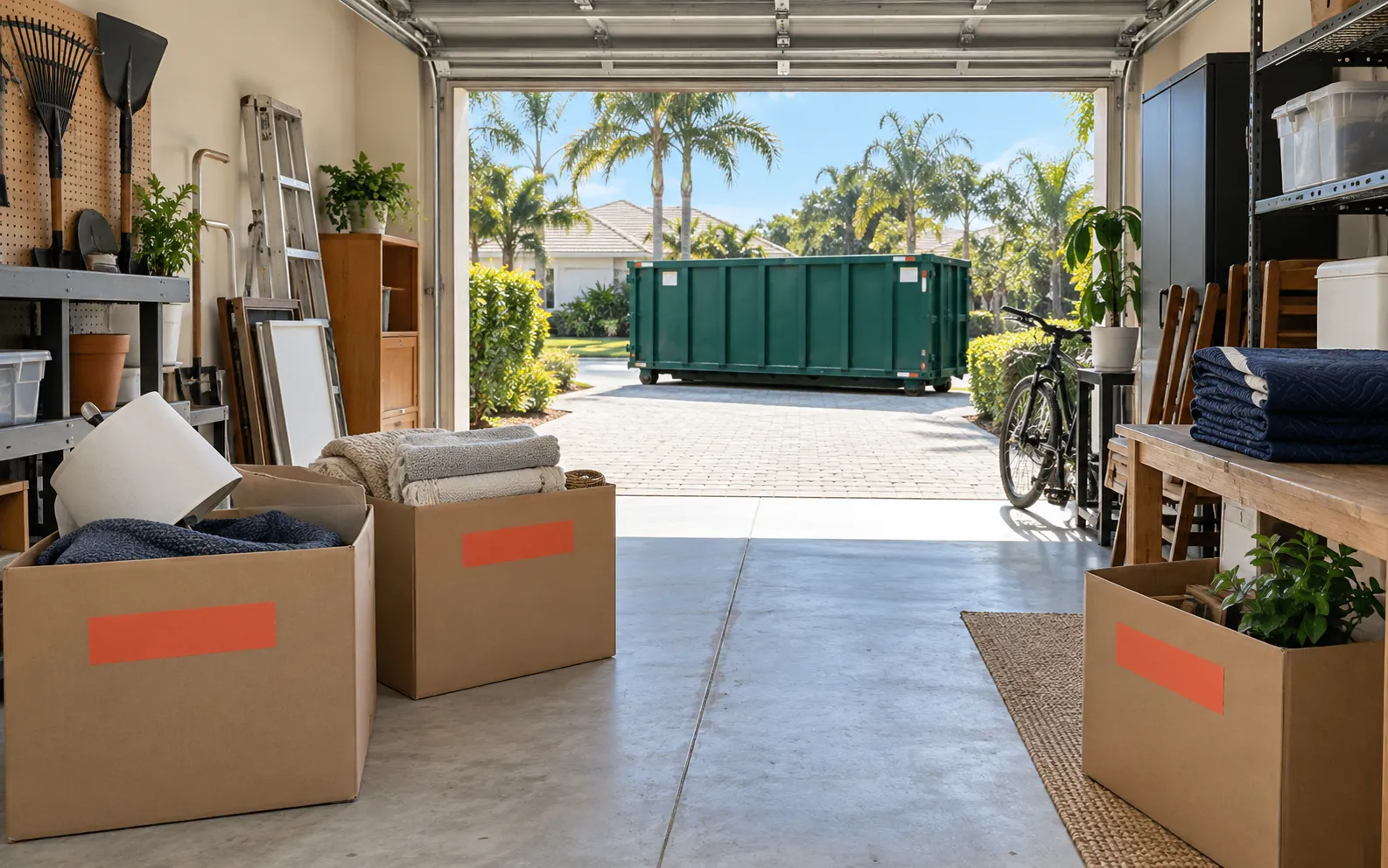
The slowest part of a garage cleanout is usually not carrying. It is making the same decision dozens of times while boxes, cords, tools, chemicals, and furniture compete for floor space. A visible zone for each decision keeps the work from collapsing into one new pile.
Set the four zones
| Zone | What belongs there | Rule |
|---|---|---|
| Keep | Items with a specific use and a place to return to. | Do not keep a “maybe” box without a deadline. |
| Donate or sell | Clean, working items a named organization or buyer will accept. | Confirm acceptance before filling a vehicle. |
| Special disposal | Paint, chemicals, fuel, oil, batteries, fluorescent bulbs, propane, electronics, and other restricted material. | Keep in original containers when possible; do not mix or load in the dumpster. |
| Approved dumpster material | Items the provider has confirmed for this container and quote. | Keep uncertain items out until answered. |
Prepare the route before touching a shelf
- Open a walkway from the back of the garage to the exit.
- Move vehicles, bikes, and rolling tools out of the work lane.
- Place the special-disposal zone away from traffic, heat, sparks, and children.
- Keep a broom, dustpan, sturdy boxes, bags approved for the material, and basic protective equipment nearby.
- Photograph the full garage and the largest items before calling about container size.
Work in narrow passes
Choose one wall, one shelving bay, or one cabinet at a time. Finish its decisions before opening the next area. Moving every item to the driveway at once creates weather risk, blocks access, and hides hazardous or valuable items inside a larger pile.
Start with obvious trash and empty packaging, then handle tools and reusable equipment, then bulky items. Leave chemicals, batteries, and unidentified containers in place until you can read the labels and plan the correct route.
Use a decision filter for stuck items
- What exact task will this item do?
- Would I buy or borrow it for that task today?
- Is it complete, safe, and working?
- Does it have a defined storage location?
- If it leaves, does it need donation, recycling, hazardous-waste, e-scrap, or provider approval?
Sentimental and document boxes deserve their own quiet review away from the loading path. Do not make permanent decisions about photographs, legal papers, tax records, or family items while the crew or pickup clock is running.
Route restricted material correctly
Manatee County publishes a household-hazardous-waste list that includes paint, stain, varnish, pesticides, cleaning compounds, gasoline, diesel, motor oil, propane tanks, fluorescent bulbs, and many batteries. The county instructs residents not to put HHW in regular trash and provides separate resident drop-off guidance. Check the current Manatee County HHW and e-scrap page. Source reviewed September 23, 2026; resident eligibility and schedules can change.
Finish with a pickup check
- All loaded material was approved for the container.
- Nothing rises above the rim or projects over a side.
- The load is spread instead of stacked heavily at one end.
- The garage, gate, driveway, and truck approach are clear.
- Donation and special-disposal items are not stranded outside.
- The provider knows about any change in material or access.
Pair this plan with the accepted-material sorting guide before loading begins.
Source record: Manatee County HHW and e-scrap service page. Retrieved September 23, 2026. Geographic scope: eligible Manatee County residents; verify the latest schedule and accepted items.